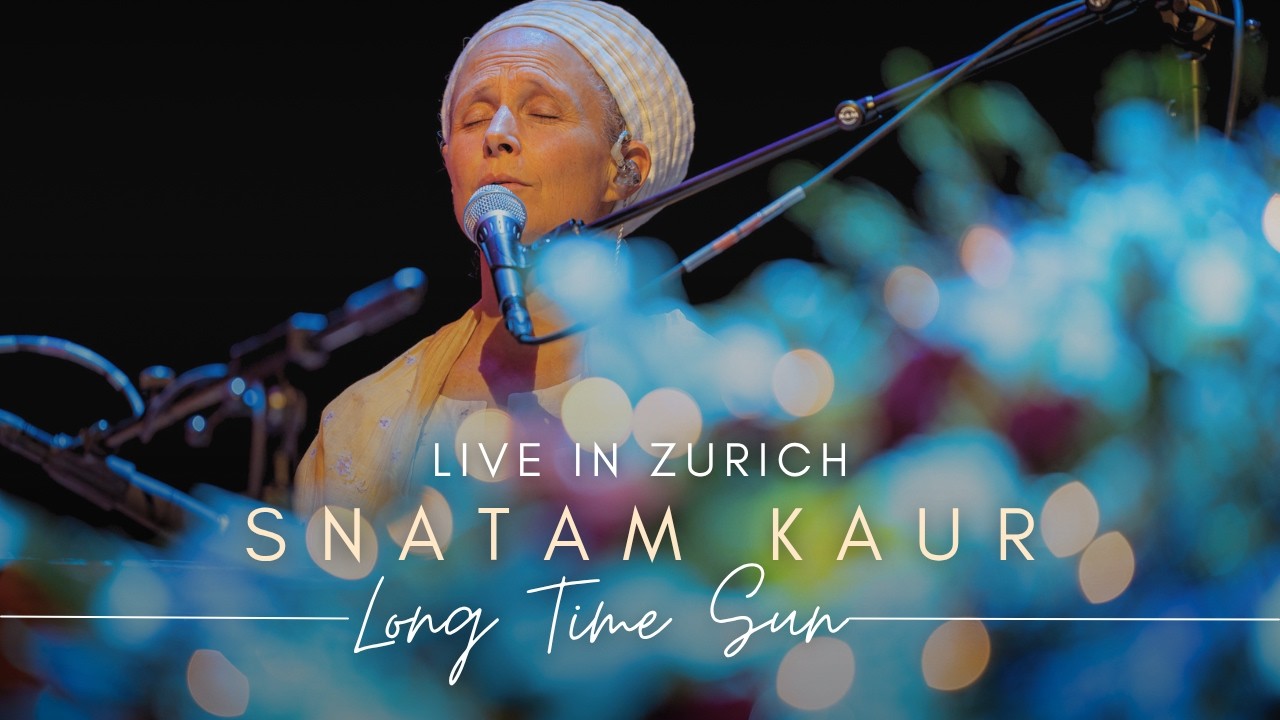
Snatam Kaur shares devotional prayers sung in Portuguese—"Paz a todos" (Peace to all), "Luz a todos" (Light to all), and "Amor a todos" (Love to all)—in honor of her upcoming concert tour across three Brazilian cities in October 2024. Filmed at a chapel dedicated to Saint Francis near her home, the prayers represent a practice of extending spiritual intention across language and cultural boundaries.
What does it mean to pray in another language?
Snatam Kaur's choice to sing these prayers in Portuguese rather than in English or the original Sanskrit-influenced Sikh devotional style demonstrates a principle of spiritual adaptation and cultural respect. By meeting audiences in their native language, a spiritual teacher acknowledges that the heart's intention translates across linguistic boundaries. The prayers themselves are simple and direct: "Paz a todos" (Peace to all), "Luz a todos" (Light to all), and "Amor a todos" (Love to all). These three pillars—peace, light, and love—form a basic framework for personal and collective blessing. Singing them in Portuguese makes these intentions available not as abstract concepts but as lived invitations for those who will gather at the concerts.
Why choose a chapel dedicated to Saint Francis?
Kaur filmed this prayer offering at a chapel dedicated to Saint Francis, located near her home. Saint Francis is venerated across Christian traditions as a saint of peace, beloved creatures, and humble devotion. The chapel's location is significant: Kaur notes that "by Divine Grace" it remains close to her home and that she loves visiting for "the deep peace" the environment brings. This choice of setting is not incidental to the message. Spiritual practice often depends on the quality of the space in which it occurs. A dedicated chapel, especially one honoring a figure known for peace and compassion, amplifies the resonance of prayers sung there. Kaur's mention that she frequents this space for peace suggests she understands sacred geography—the way certain environments naturally support inner quietness and intention.
How do devotional singers prepare their consciousness for performance?
Recording prayers before a concert tour serves multiple functions. First, it is a form of preparation: singing prayers in advance attunes the singer's voice and heart to the frequencies they will be working with throughout the tour. Second, it is an act of generosity toward those who cannot attend the live events—by sharing the video, Kaur extends the blessing to her larger audience. Third, it is a declaration of intent. By publicly stating that these three prayers (peace, light, love) are what she carries into Brazil, she creates a container of meaning for the tour itself. The concerts on October 3 (São Paulo), October 5 (Florianópolis), and October 9 (Belo Horizonte) will unfold under the umbrella of this intention.
What is the spiritual practice behind sending prayers outward?
Kaur explicitly states: "I send these prayers out today." This language reflects a belief held across many spiritual traditions—that intention, particularly when embodied in sound and song, can travel and affect consciousness beyond the immediate listener. In Sikh kirtan tradition, from which Kaur's work emerges, sound (naad) is considered a vehicle for divine grace. By singing and filming prayers in a sacred space, Kaur participates in a practice of radiating blessing. The prayers are not confined to the chapel; they are broadcast outward through the video, intended to reach people in Brazil and beyond. This reflects the understanding that spiritual practice is not solitary but relational—it extends from the practitioner outward into the world.
How do musicians use concerts as spiritual containers?
Announcing upcoming concerts alongside prayers reveals how Kaur structures her work: the concerts are not separate from spiritual practice but are an expression of it. By prefacing the tour with a video of prayers sung in Portuguese, she establishes the concerts as devotional events, not merely musical performances. This framing invites attendees to arrive not just for entertainment but for spiritual gathering. The three cities—São Paulo, Florianópolis, and Belo Horizonte—each represent distinct cultural regions of Brazil, and by touring across them, Kaur spreads her message geographically. Tickets are available at snatamkaur.com/events, making the practical and the spiritual aspects inseparable: the spiritual intention and the logistical reality of attending are held together.
What does peace, light, and love represent together?
The three prayers form a coherent spiritual trinity. Peace (paz) addresses the inner turbulence and external conflict that afflict individuals and communities. Light (luz) represents clarity, illumination, and the presence of divine wisdom. Love (amor) is the binding force that allows peace and light to be received and integrated rather than remain abstract concepts. Together, they describe a complete spiritual vision: a state in which conflict is stilled, consciousness is awake, and the heart is open. By repeating these three intentions across three cities in three separate performances, Kaur ensures that the full spectrum of the blessing is available to all who gather.
Where to go from here
For those inspired by Snatam Kaur's approach to devotional music and prayer, several paths forward are available. If you are in Brazil during the concert dates (October 3-9, 2024), attending one of the three performances offers the opportunity to experience these prayers and others in a live, communal setting. If you cannot attend in person, watching this video and repeating the prayers yourself in Portuguese or your native language extends the practice into your own spiritual life. Exploring Saint Francis as a figure of peace and devotion may deepen your understanding of why the chapel choice matters. Finally, considering how language and sound can be vehicles for spiritual intention in your own practice invites a more conscious engagement with both what you sing and how you sing it. The prayers are an invitation: not to believe anything specific, but to join in an intention for peace, light, and love in your own heart and in the wider world.